Title: Nigeria Meets Sweden: An Intercultural Cookbook
Author: Philippe Glago
Year of Publication: 2024 (First Published 2022)
Publishers: SEVHAGE
Page Extent: 74 Pages
Reviewer: Professor Maria Ajima
A popular idiom avers that the road to a man’s heart is through his stomach. Through the ages, this has proven true as food has been used in times past to conquer nations and broker peace. This is well captured by the World Food Programme when they mention in their work, Winning the Peace: Hunger and Instability (2017) that “throughout all of history, food has simultaneously fueled the machines of war and provided the foundations for peace. The quest for food is so fundamental that it is built into our genetic material.” It is also the spirit behind culinary diplomacy, also known as gastro-diplomacy, a well-recognised soft power strategy for fostering intercultural dialogue and strengthening diplomatic relations. Throughout history, nations have used food as a diplomatic tool, from Japan’s sushi diplomacy to Thailand’s global promotion of Thai cuisine and South Korea’s push to internationalise kimchi. There are also the ‘Taste of Cambodia’ campaign and the Indonesia Spice Up the World programme, both in 2021.

The 2022 initiative, Nigeria Meets Sweden: An Intercultural Cookbook, authored by Philippe Glago and published by SEVHAGE as a project of the Embassy of Sweden in Abuja, is a remarkable example of how food can act as a bridge between cultures. This award-winning book is a handshake between two broad cultures offering an exchange of traditions, perspectives, and diplomatic goodwill through the universal language of food. It was started as a project under the former ambassador, H.E. Carl Michael Gräns and re-issued with a powerful introduction by H.E. Annika Hahn-Englund in 2024.
The cookbook shows the distinct yet sometimes complementary flavours, ingredients, and cooking techniques of Nigerian and Swedish cuisines. Dishes such as Naija Beef Stew with Okra and Toast Skagen capture the essence of their respective cultures while also inspiring an adventurous fusion of both. This interweaving of culinary heritages fosters an appreciation for cultural diversity and creativity, particularly evident in the “Swaija” dishes, where elements from Sweden and Nigeria blend into new and exciting gastronomic experiences. Such innovations reflect not only the adaptability of cuisine but also the broader evolution of cultural exchange in our increasingly interconnected world.
At its heart, the book embodies the principles of culinary diplomacy, as captured in the Introduction by the Swedish Ambassador to Nigeria, H.E. Annika Hahn-Englund who acknowledges food’s unique ability to strengthen ties between nations. In this same tradition, Nigeria Meets Sweden serves as an engaging entry point for both cultures, allowing readers to explore and appreciate each other’s culinary heritage. The book is an invitation to mutual understanding, reinforcing the idea that diplomacy is not limited to formal negotiations but can be woven into the very fabric of daily life through something as simple as a meal shared between friends.

Beyond its diplomatic and cultural roles, the book is an invaluable resource for both amateur and professional cooks. It is thoughtfully structured, covering everything from stocks and sauces to main courses and desserts, ensuring accessibility for a wide audience. The language is straightforward and conversational. There are four broad parts: Stocks, which look at base stocks for soup; Served in Sweden, focusing on foods more common in Sweden; Served in Nigeria, showcasing Nigeria’s wondrous cuisine; and Cross-Country Cuisines, which is a marriage of both. With over 111 carefully curated recipes, it provides a balance of traditional dishes, modern adaptations, and cross-cultural experiments. Acknowledging that certain ingredients may not be readily available across different regions, there is the option of substitution and creativity, noted by H.E. Hahn Englund in the Swedish saying “Man tager vad man haver.” In essence, “you take what you have.” This approach makes the cookbook practical and versatile, allowing its readers to engage with it regardless of their location or culinary background.
One is thus served instructions for a series of fine dishes from the Naija side that include popular recipes like jollof rice, catfish pepper soup, suya, efo riro, akara, puff-puff and the not-so-popular kola nut cake with cream. The Swedish meatballs, chicken anchovy, and Jansson’s temptation call out from the Swedish divide, while they find a confluence in meals like salmon with spring vegetables, braised chicken, and lime pie.
Another striking feature of Nigeria Meets Sweden is its visual appeal as curated by lovely shots by Kim Dashong. The vibrant, high-quality images, captured at the Swedish Residence in Abuja, elevate the experience of the work into becoming an artful representation of the joy of food. The well-designed layout, coupled with personal notes from the chef, adds warmth and intimacy, drawing the reader into the shared experiences that unfold through the preparation and enjoyment of these dishes. Food photography plays an essential role in culinary literature, as it does here, where the images enhance engagement, provide visual guidance for preparation, and, most importantly, spark curiosity and excitement.
In a broader context, the book contributes to the global dialogue on food sustainability and health. Many of the featured recipes incorporate fresh, local ingredients that not only support regional economies but also promote nutritious eating. This ties into a growing awareness of food as medicine, a concept deeply ingrained in both Swedish and Nigerian traditions. From Sweden’s use of fermented foods to Nigeria’s reliance on nutrient-rich ingredients like bitter leaf and hibiscus, the cookbook subtly acknowledges how food serves as sustenance and as a means of healing and maintaining well-being. As global health concerns and food security issues become increasingly pressing, books like this emphasise the importance of mindful eating and the nutritional wisdom embedded in cultural traditions.

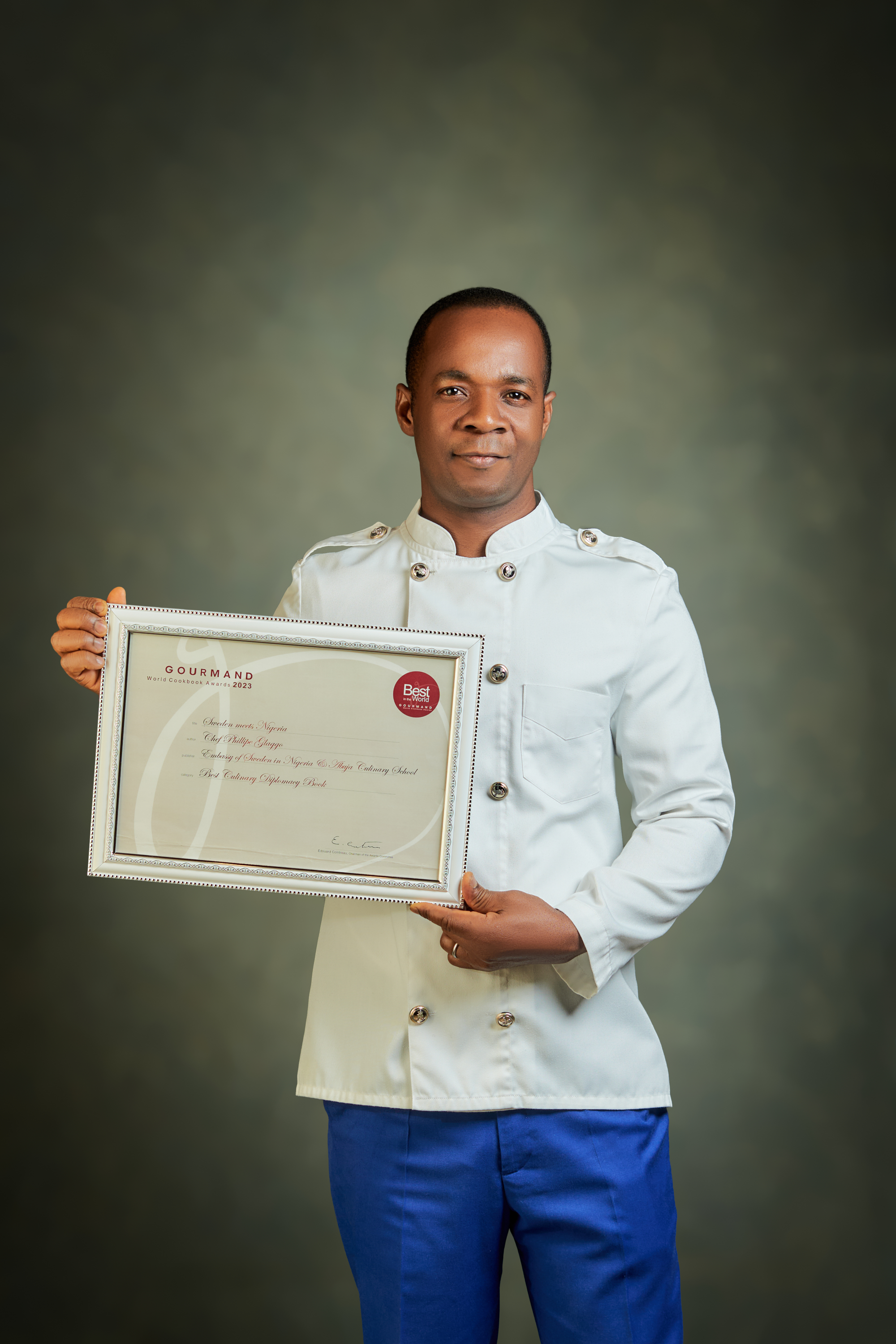
Additionally, Nigeria Meets Sweden has the potential to extend beyond print into media and broadcast platforms. Cooking shows, social media campaigns, and collaborative culinary events could amplify its reach, bringing the concept of cultural fusion to a wider audience. A video series featuring the chef preparing signature “Swaija” dishes or a televised segment exploring the diplomatic power of food could reinforce the book’s core message while making it more accessible to younger, digitally engaged audiences. There is also room for online cooking tutorials raised from the book, perhaps in collaboration with the publishers and its well-regarded development, literary and cultural promotion arm. Whether approached as a hands-on cooking manual, a deep dive into cultural identities, or a handshake between two nations, this project is one well worth the time. It is a cultural document of note that is well done, from inception to realisation in an enviable showcase that the author, the publishers and the Embassy can be well proud of. It is not for nothing that the book was awarded a Gourmand Award for Best Culinary Diplomacy Book (2023) during the Saudi Fest in Riyadh. It is a true celebration of the rich gastronomic landscapes of the nations its title boasts and a demonstration of how culinary diplomacy can serve as a meaningful and lasting tool for international relations. Ultimately, it is a reminder that no matter what politics says, when push comes to shove, we can be united by our tongues and stomachs.
Professor Maria Ajima is a multiple award-winning writer, essayist, scholar and professor of Literature at the Benue State University, Makurdi. She is a former President of Women Writers of Nigeria (WRITA), and a Trustee of the Association of Nigerian Authors (ANA) at the National level.
 sevhage