As a young rap fan, I first discovered Eve on the remix of Ruff Ryder’s Anthem. At the time, I was deeply immersed in the music of DMX, but Eve’s unique flow immediately grabbed my attention, and I found myself hooked on her sound. Reading her memoir, Who’s That Girl, was a journey back in time, and I found myself alternating between devouring the pages of her story and streaming her timeless classics.
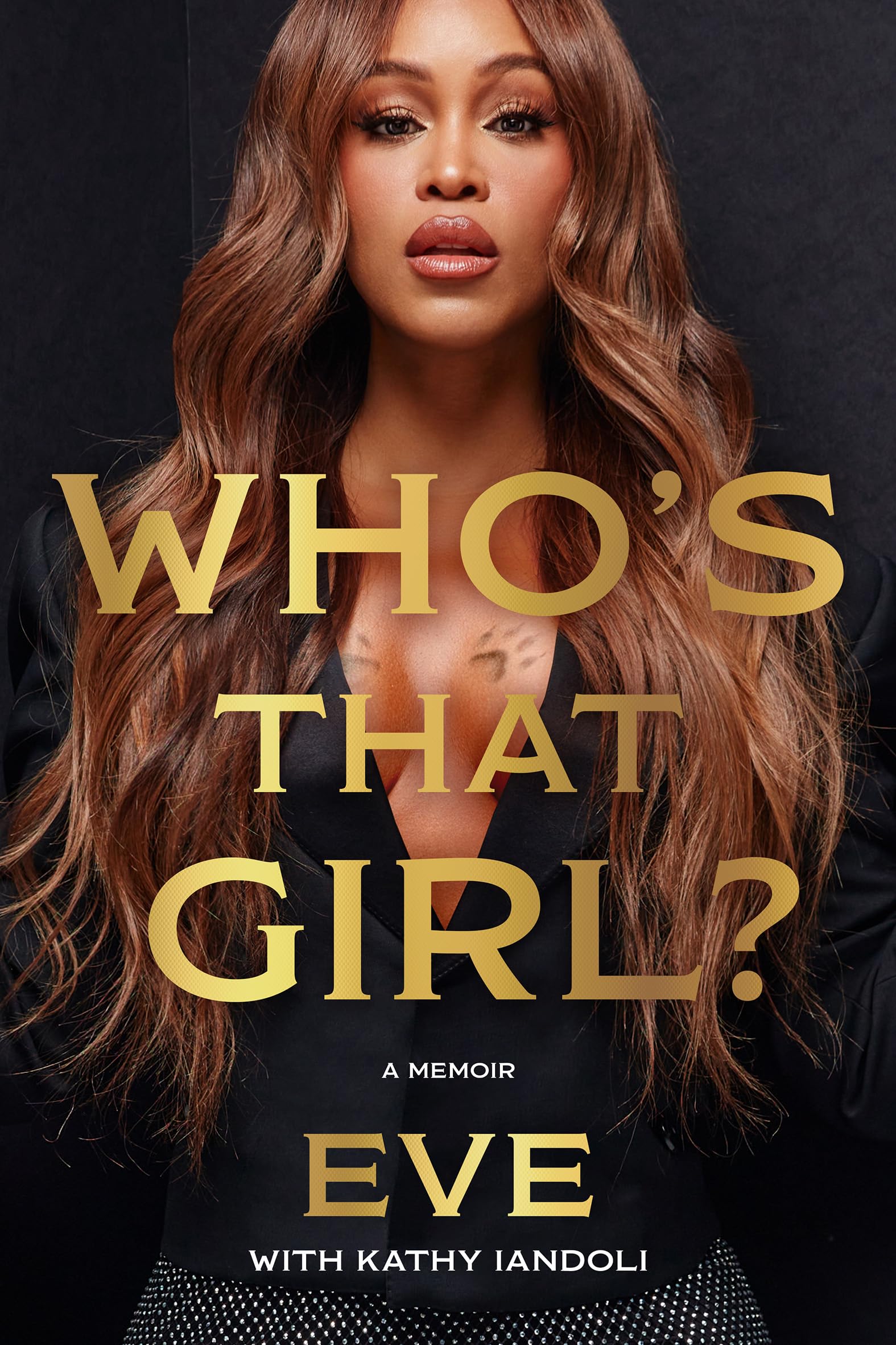
In Who’s That Girl?, Eve takes us through the emotional and often gritty path she traveled to become a global superstar. She opens the door to the raw and complicated world behind the glitter of fame, touching on themes of race, family, gender, and the business of music. Her memoir is both a personal reflection and a poignant exploration of the complexities that shaped her career.
1. Identity and Self-Discovery
Eve reflects on her struggle with identity and the search for her place in the rap game, from her early days with Dr. Dre to her time with Ruff Ryders, and finally to her evolution as an independent artist. She doesn’t shy away from the rebellion that marked her youth—detailing her disconnect with the traditional school system, a theme she argues is often a shared experience for those who challenge the status quo. Her candid storytelling gives insight into the mindset of a woman navigating both personal and professional growth in a male-dominated industry. She shares how she carries the burden of expectation from rapping to acting, navigating self doubt and expectations as she progresses.
2. Love and Relationships
Relationships—both personal and professional—are central to Eve’s narrative. She opens up about the complicated dynamics with her family, particularly her mother, grandmother, and aunt, whose influence shaped her decisions throughout her life. The memoir also delves into her deep connection with Dee and Wah of Ruff Ryders, who were instrumental in launching her career. They helped refine her raw talent, turning it into a powerful force in the rap game. Her account of Swizz Beatz is particularly revealing, highlighting how he helped Eve craft a sound that balanced toughness with undeniable femininity. Swizz’s innovative production and infectious beats were key to shaping Eve’s musical identity, and her reflection on this partnership underscores the pivotal role he played in her success. Mase’s role in her turn around is also highlighted and provides some perspective on the current Diddy situation. Her marriage to Max, crowns her love life after years of resistance and discontent.
3. Empowerment and Independence
Eve’s journey is one of self-empowerment, especially for women in the music industry. She speaks to the challenges faced by female rappers who often have to work twice as hard to earn respect and recognition. Drawing from her own experiences with industry heavyweights like Jay-Z, Eve reveals the undercurrent of misogyny she had to battle to achieve success. She emphasizes the importance of female solidarity in rap and pays tribute to the pioneers like Queen Latifah who paved the way. Not only is Eve a rapper, but she’s also carved out a career as an actress, television host, and entrepreneur, having co-hosted The Talk on CBS. Her story is a powerful testament to resilience in the face of adversity, inspiring women to break barriers in both the entertainment world and beyond.
4. Societal Expectations
Eve addresses the industry’s tendency to pit female rappers against each other, creating toxic rivalries that undermine female unity. As she notes, “We’re always being compared to each other… It’s like, can’t we just be individuals and be respected for our own talents?” In the beginning, Eve was idealistic in trying to create alliances with fellow female rappers, but she soon realized the cold reality of the industry’s competitive nature. Despite this, she continues to advocate for unity among women in hip-hop, believing there’s enough space for multiple successful voices. Her reflections on her relationships with Nicki Minaj and Lil’ Kim provide a nuanced look at the complex dynamics within the rap world. She admires Nicki’s talent and business acumen, particularly in how she navigates a male-dominated industry. However, Eve also acknowledges the struggles Nicki faces, including constant scrutiny as a woman in the spotlight. Her relationship with Lil’ Kim is equally layered—despite being labeled rivals.
5. Resilience and Overcoming Adversity
Eve faced various challenges and setbacks, in her personal life, music, acting, clothing line and TV show adventures. From record label executives laughing during her album pitch, to wars on set of her sitcom and movies to her mom being kicked out from her clothing line business, Eve personifies resilience and the ability to overcome obstacles in pursuit of success.
The book is a collection that inspires hope and resilience not just for women but from any marginalised group.
Namse Udosen, Brighton scholar, Chevening Alum, rapper and teacher, is the author of Amang Goes to the Village. He writes from Brighton, United Kingdom.
 sevhage