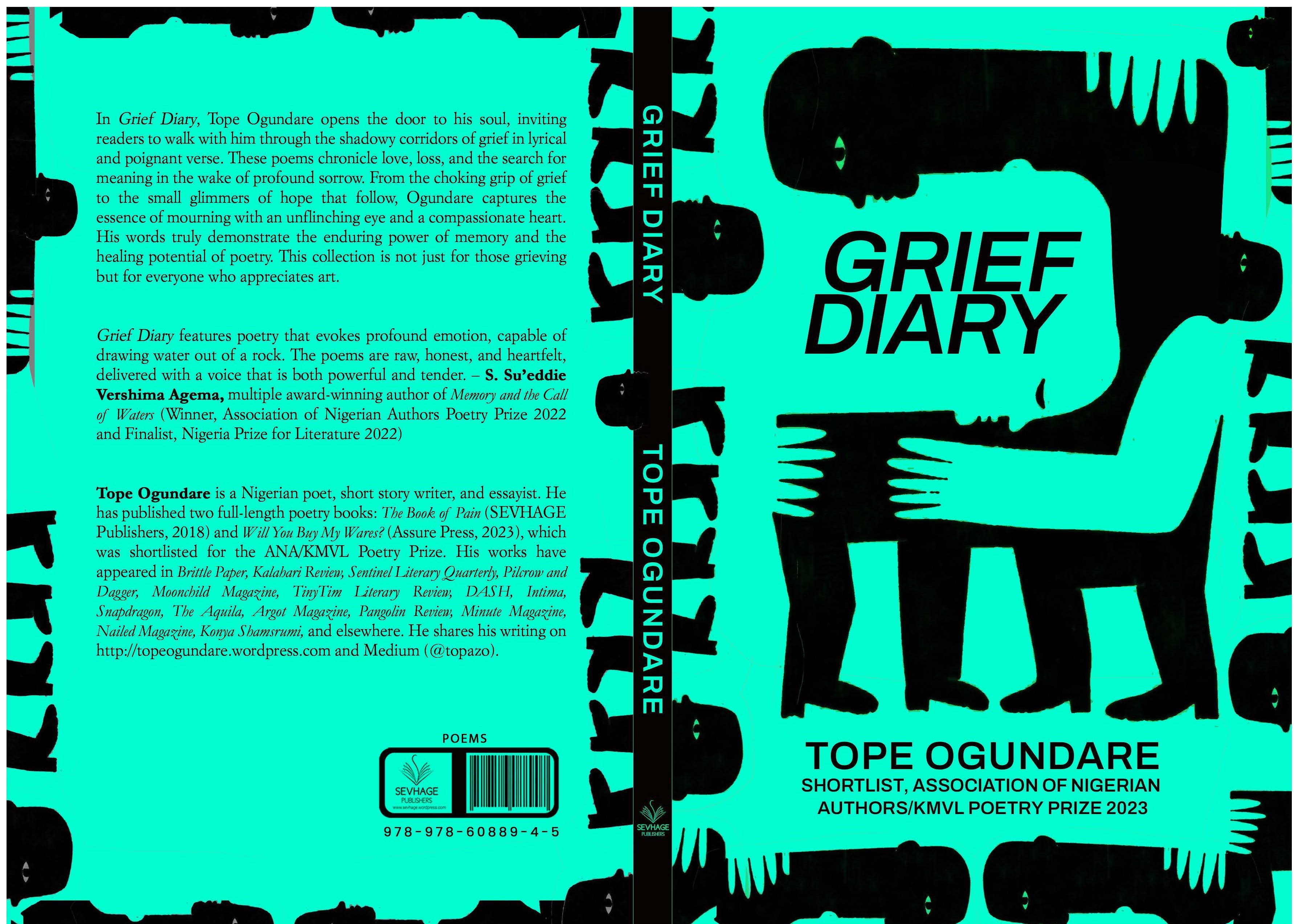
It has been an incredible year with several wins, challenges and countless lessons. As a company, we embarked on several exciting projects, though some had to be paused for various reasons. A star of these, dear friends, is GRIEF DIARY by Tope Ogundare. This remarkable collection of thirty-two poems offers a confessional on feelings that could have overwhelmed the poet [persona] but were instead transformed into something deeply moving and ultimately redemptive.
Tope, a brilliant doctor and poet, is someone I have had the privilege of knowing for years. His mastery of words and his ability to weave beauty out of pain have always been awe-inspiring. In this, his third collection, he takes on the monumental task of confronting grief head-on, using language as both a balm and a weapon. Through Grief Diary, he explores the complexities of loss, particularly the aching void left by a mother’s passing, and he does so with a grace and power that will resonate deeply with anyone who has faced profound sorrow.
As we at SEVHAGE prepare to publish this work in January, I found myself reflecting on the lessons embedded in Tope’s poems, as well as in other works I’ve encountered over the years. These reflections led to this blog post—a piece that distils some of those lessons into practical steps for anyone looking to confront their own demons through writing. Whether you’re battling grief, seeking clarity, or simply hoping to pour your soul onto the page, these steps offer a guide to finding light in the darkness…

1. Acknowledge Your Demons
Sometimes, exorcism starts with knowing what demons you are trying to get rid of… So, you just might have to introspect and acknowledge what it is you need to confront. If you can name it, you can work to tame it! So, broda, sista, recognise and name your pain. Tope Ogundare’s was the unbearable loss of his mum. What’s yours?
2. Create a Safe Space
Writing demands vulnerability and giving yourself permission. Find a quiet corner, a trusted notebook, or even a blank screen to pour out your thoughts without fear of judgment. Think of it as your own sacred ground, much like the quiet of the compound where elders tell their stories under the moonlight.
3. Let the Pain Speak
Don’t edit yourself in the first draft. Let the emotions flow naturally, like the rhythm of a talking drum narrating tales of love, loss, and triumph. [Insert Frozen voice here: Let it go, let it goooo!] Every line in Grief Diary resonates because it allows grief to express itself in raw and unfiltered forms. Get those tears flowing to the pages with ease, don’t put any obstruction.
4. Structure Your Chaos
Once you’ve poured your heart out, the logical thing is to begin to arrange the chaos or raging sea that you have let go. Grief Diary does this beautifully, balancing moments of lamentation with reflection. Just as proverbs bring wisdom to complex situations, structure your words to reveal meaning. Let structure show the depth of what you conveyed. And if you decide that the structure of your pain should be structureless, that works too.
5. Use Imagery and Metaphor
Poetry thrives on imagery. Tope Ogundare’s lines, like “my tears flow towards the sea,” make grief tangible. Draw from your surroundings and culture—the rustle of palm trees, the smell of rain-soaked earth—to enrich your writing with local colour. And if you decide you want to simply just write normally without making them poems, do so. If you want to make your pain or inner beast to thrive in prose, do so too. It is yours, use what tool is best to handle it but ensure you don’t just leave it raw.
6. Revisit and Rewrite
The first draft is never the last. Revisiting your work allows you to refine your expression, just as Ogundare’s poems evolved to encapsulate the universal within the deeply personal. Like the communal effort of pounding yam, take your time to ensure the texture is just right. Look at your work so that you can pay tribute to what you felt. If we can make the pain our gain, why not?
7. Share Your Work
Healing often comes through connection. Whether it’s with close friends or an audience, sharing your writing can be liberating. Think of it as sitting around a fire, where stories and shared experiences bind a community together. Even as we work towards our Benue Book and Arts Festival where this is a regular feature, you can think of how to create this connection. No matter how alone you think you are, if you look hard enough, you will find people somewhere to share…and that brings me to my next point:
8. Find Supportive Communities
Engage with others who understand your journey, people who can empathise. Readers of Grief Diary will find themselves drawn into a community of shared experience, where their own griefs are echoed. Seek out writing circles, whether online or in-person, that celebrate your unique voice. You can also find your community. Loooook…
9. Celebrate Small Wins
Every word written is a victory. Celebrate the courage it took to put your pain into words, much as we celebrate the completion and impending release of Grief Diary. In several traditions, even small milestones are met with clapping and ululations. You can check the Agama lizard who always acknowledges his wins with nods… Time for you to start nodding too!
10. Move Towards Healing
Writing is a cathartic process, but it’s also a step toward healing. Let your words remind you—as Grief Diary does—that you can find light even in the darkest moments. Like the rising sun after a long harmattan night, healing will come.
Find help if you need to, talk, let it go…but know that whatever it is, it will only get better. I hope these steps inspire you to confront your own demons through creative expression. And even as we at SEVHAGE count down to the official release of Grief Diary at the end of January, we hope you are reminded of the power of words to heal, connect and transform.
 sevhage