Damilola Omotoyinbo is a Nigerian Poet/Writer, a 2019 Fellow of the Ebedi International Writers Residency, and a member of the Frontiers Collective. She emerged as Winner of the 2023 Writivism Poetry Prize. She has also won several poetry honors. Notably; Co-Winner of the 2023 Writing Ukraine Prize, 2023 SEVHAGE/Agema-Founders Prize (for Poetry), 2021 SprinNg Annual Poetry Contest, as well as being longlisted and/or shortlisted for several writing prizes. She is a Pushcart Prize Nominee and also a Best of The Net Nominee. Her writings reflect on human experiences and hope. She has been published on several magazines including; Ake Review, Agbowo, Lolwe, Poetry Column NND, Olongo Africa, Torch Literary Arts, Konya Shamsrumi, and elsewhere. In this interview with Mathew Daniel, she discusses her writing, her winning, and much more. Excerpts:
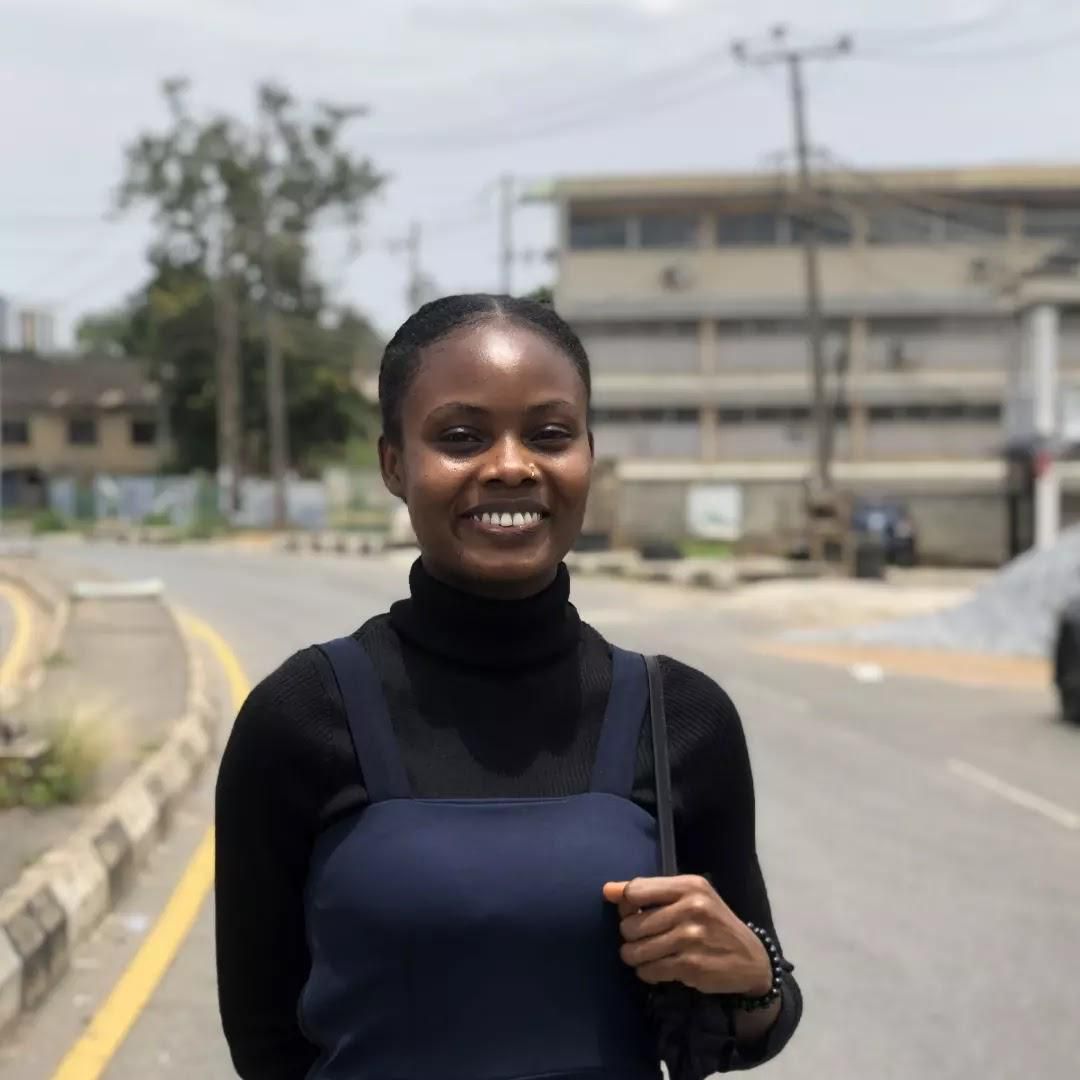
You recently emerged as the winner of the Writivism Prize for Poetry. How would you describe the feeling when you saw the announcement?
Shocked! I thought I would wake up and realise everything was a long dream. I was not expecting to win, there were writers I respect on that list, so, it was a privilege to be there in the first place and I thought that was enough. The Writivism community is doing a great job and I am glad to be a beneficiary. I am happy, I feel seen and heard and I am grateful to God for winning.
You’ve won a number of awards and accolades including the SprinNg Poetry Contest, Agema Founder’s Award for Poetry, and now Writivism among other important achievements. How do these competitions contribute to the African Literary ecosystem from your point of view, how important are they beyond the remuneration a poet receives and is there a need for more?
We don’t write for the awards or the accolades, but it is also an important part of the craft. It shows we are doing something right, the world is celebrating us for it and I believe the remuneration is a huge part of it. I remember the year I got into Ebedi Writers’ Residency, I had the chance to write and read for six weeks and get paid each week. I witnessed a significant improvement in my writing because I had enough time to concentrate and not worry about some essential things in life. I was happy when I saw that the Writivism Awards came back from hiatus (many awards and residency programs are coming up in Africa).
Beyond the remuneration, I believe the competitions are good because our stories are more relatable to us; we cannot expect people who have not shared our experiences to judge our work. Competitions like these create more visibility and a reward system for the writer and their work. I honestly wish there would be a time when African writers won’t need to go to Western Countries for fully funded MFA programs. I think structures still need to be created to fund programs like these. We need better structures—in terms of funding, visibility, and the reading culture—a lot of beautiful things are happening in the African literary space that the world needs to see.
Your winning poem “The Evening News” was read during Writivism’s collaborative effort with the Church of Poetry [hosted by Akpa Arinzechukwu and Heneh Kyereh Kwaku]. To be honest, it wasn’t just a powerful poem but also a haunting one, and yet, it leaves the aftertaste of sweetness in its nuances. You said you wrote the poem out of your experience from your time working as a journalist. How has working as a journalist changed or reshaped your perspective on the Nigerian experience so much as to inspire such a beautiful and powerful poem?
When I was younger, I wanted to be a Newscaster or a Journalist who travels to different war zones to cover happenings. I got my dream job (well, I did not visit any war zone), aside from the fact that it was stressful, that you work every day of the week even on Sundays—I was also not in a good place mentally. Out of curiosity, I read up on those who were kidnapped or killed, they were not mere numbers, they were humans with families and loved ones. When we have News headlines that read, ‘Three were killed in a bomb blast’, real people were killed, and real people are mourning.
About the deaths and killings in Nigeria and other parts of the world, it is saddening. While there might be little I can do as an individual, I believe I could join my voice with those crying for peace in the world. My experience as a journalist has created in me a huge sense of empathy. I always feel guilty for this comfort when people are getting killed each day for what they know nothing about. I cringe watching, reading, or listening to the news. It is saddening, so saddening, we could go on about the Nigerian experience because there is so much to talk about.
I read your bio and I must say, I’m a co-believer in the power of writing as you are. What kind of change do you aim your writing at beyond just saying “positive change”?
I believe writing is a weapon, and with it, we can make a huge positive impact in the world if we are so intentional about change. I want my work to give people a sense of belonging even in their pain and I am happy I am doing that.
Poetry has often been called a spiritual art. Do you also share this sentiment?
Yes, poetry is a spiritual art. I love solitude because I can connect with myself and God. My mind is clear, I just read and take long walks—many times, I get lost, but it is liberating. My works come from that place of connectedness.
I love reading Psalms and Proverbs and I always tell myself that the entire bible was written by poets and lovers of literature. Poetry, or literature at large, I believe, invokes something in people, something I don’t have a name for. It is just so huge you can’t give it a name but when you feel it, you will know.
There are poets who write brilliant and revolutionary poems but live the opposite of their poetic messages. Such writers oppose oppression in their writings only but side with the oppressor in speech and action. What’s your opinion of this?
I think that is a big fraud. It is not right to make a name for yourself in the writing space out of people’s pain.
Most Nigerian poets would include Wole Soyinka, Christopher Okigbo, Niyi Osundare, Ben Okri, Remi Raji, and the likes from the first, second, and third generation Nigerian poets as inspiration for their works. Are there contemporaries who you look up to or who inspire you deeply?
I grew up reading the books of those writers mentioned, and most of my earlier works were shaped by them. I met Remi Raji, it was a surreal experience. I have read Ben Okri’s The Famished Road thrice and it is one of my favorite books. We were supposed to meet Wole Soyinka during the Ebedi Residency. I stayed up that night thinking about what it would look like and my housemates spoke about it for days, but we could not meet him. He was on a trip.
While there are these phenomenal writers, I believe there are contemporary writers who are doing so well with their craft and they amaze me. I can’t start to mention names because the list will be very long. I just believe Nigerian contemporary literature should be pushed. For example, many of the poetry chapbooks published by the African Poetry Book Fund and other publishers each year are not even in the curriculum of Nigerian Tertiary Institutions and Secondary schools, we still have the old books. It looks to me that there is no space for us in the system.
Are you currently working on anything or a project at the moment? Can you share a snippet with us?
I have spent the past couple of months writing codes or studying them. Probably because I have enough work that can last me for the rest of the year except I want to make a themed submission. I am currently working on a creative writing workshop towards the end of June, and I am happy with the number of submissions received. It is my little way of giving back to the writing community.
On Writing, I have been more patient with my work. I just want to sit with the old ones and the new ones will eventually go into a chapbook or a full-length work in the future. I am also working on some abandoned fiction, I believe I can use this time to polish them. Well, I am working on a project that’s making me feel like whatever… Lol. I have given most of my time and resources into it and I will be glad if it is worth it in the end. And yes, I have been reading!
Mathew Daniel (he/him) is a poetry enthusiast and a graduate of Ahmadu Bello University, Zaria. He’s also a volunteer reviewer with Writers Space Africa’s Review Team. His works have appeared or forthcoming in WSA Magazine, Olney Magazine, Poetic Africa, Konya Shamsrumi, Peppercoast Lit, The Shallow Tales Review, and elsewhere.
 sevhage